

Women entrepreneurs play a critical role in economic development and community empowerment. Across many industries, women-owned businesses contribute to job creation, innovation, and social impact. Despite this contribution, many women entrepreneurs continue to face barriers that limit their ability to start and scale businesses. Women enterprise development programmes help address these challenges by providing targeted support that enables women-owned businesses to grow and compete in the market. Barriers women entrepreneurs face Women entrepreneurs often encounter challenges that differ from those faced by their male counterparts. These barriers may include limited access to funding, smaller professional networks, and societal expectations that affect business participation. In many cases, women entrepreneurs also face challenges related to balancing business responsibilities with family and community obligations. These factors can make it more difficult for women-owned businesses to access opportunities for growth. Why supporting women-led SMEs matters Supporting women-led SMEs contributes to broader economic inclusion and sustainable development. Research consistently shows that when women succeed in business, they often reinvest resources into their families and communities. This creates positive ripple effects that extend beyond the individual business. By supporting women entrepreneurs, enterprise development initiatives contribute to both economic and social progress. The role of enterprise development programmes Enterprise development programmes provide structured support that helps women entrepreneurs strengthen their businesses. These programmes may include Entrepreneurship training and capacity buildingMentorship and advisory supportAccess to networks and partnershipsSupport with market access and procurement opportunities Through these initiatives, women entrepreneurs gain the skills and confidence required to build sustainable businesses. Funding, mentorship and market access Access to funding remains one of the most significant challenges for women-owned businesses. Enterprise development programmes often help address this by connecting entrepreneurs with funding opportunities and financial guidance. Mentorship also plays an important role. Experienced professionals can provide strategic advice that helps entrepreneurs strengthen leadership skills and make informed business decisions. When combined with market access opportunities, these forms of support create pathways for women-owned businesses to grow and succeed.

Youth Entrepreneurship Programmes in South Africa: Why They Matter for Economic Growth
South Africa faces one of the highest youth unemployment rates in the world. Many young people struggle to find stable employment despite having education, skills, and ambition. As a result, entrepreneurship is increasingly viewed as an important pathway for economic participation and opportunity. Youth entrepreneurship programmes in South Africa play an important role in addressing this challenge. By supporting young entrepreneurs with training, mentorship, and access to networks, these programmes help transform innovative ideas into viable businesses. When supported effectively, youth-led businesses can contribute significantly to economic growth, job creation, and innovation. Youth unemployment and entrepreneurship in South Africa Youth unemployment remains a major economic challenge in South Africa. Many young people entering the labour market find limited opportunities in traditional employment sectors. Entrepreneurship offers an alternative pathway. Instead of relying solely on job creation by large organisations, young entrepreneurs can build businesses that create opportunities for themselves and others. However, starting a business at a young age often comes with challenges such as limited access to funding, lack of business experience, and limited professional networks. Why youth-led businesses drive economic growth Young entrepreneurs often bring fresh perspectives, creativity, and innovative thinking to the business environment. Youth-led businesses are more likely to explore new technologies, digital platforms, and emerging markets. This ability to innovate allows them to identify opportunities that may not be visible within more traditional industries. When young entrepreneurs succeed, they contribute to broader economic participation and job creation within their communities. The role of structured development programmes Youth development programmes provide structured support that helps young entrepreneurs move from ideas to sustainable businesses. These programmes typically focus on developing both entrepreneurial skills and practical business capabilities. Common elements of youth entrepreneurship programmes include Entrepreneurship training and business educationMentorship from experienced professionalsAccess to networks and industry partnershipsSupport with market access opportunities These elements help young entrepreneurs develop the confidence and capability required to navigate the early stages of business development. Skills, mentorship and access to markets One of the most valuable components of youth empowerment initiatives is mentorship. Experienced mentors can provide guidance on strategic decision making, financial planning, and operational management. This practical support helps young entrepreneurs avoid common mistakes while strengthening their business strategies. In addition to mentorship, access to markets is critical. Programmes that connect young entrepreneurs with potential customers, partners, and suppliers can significantly increase their chances of success. Creating sustainable youth entrepreneurship ecosystems Youth entrepreneurship programmes work best when they are part of broader entrepreneurship ecosystems. Collaboration between corporates, development organisations, investors, and educational institutions can create supportive environments where young entrepreneurs can access the resources they need to grow. By investing in youth entrepreneurship programmes in South Africa, organisations contribute to building sustainable businesses that support long term economic growth.
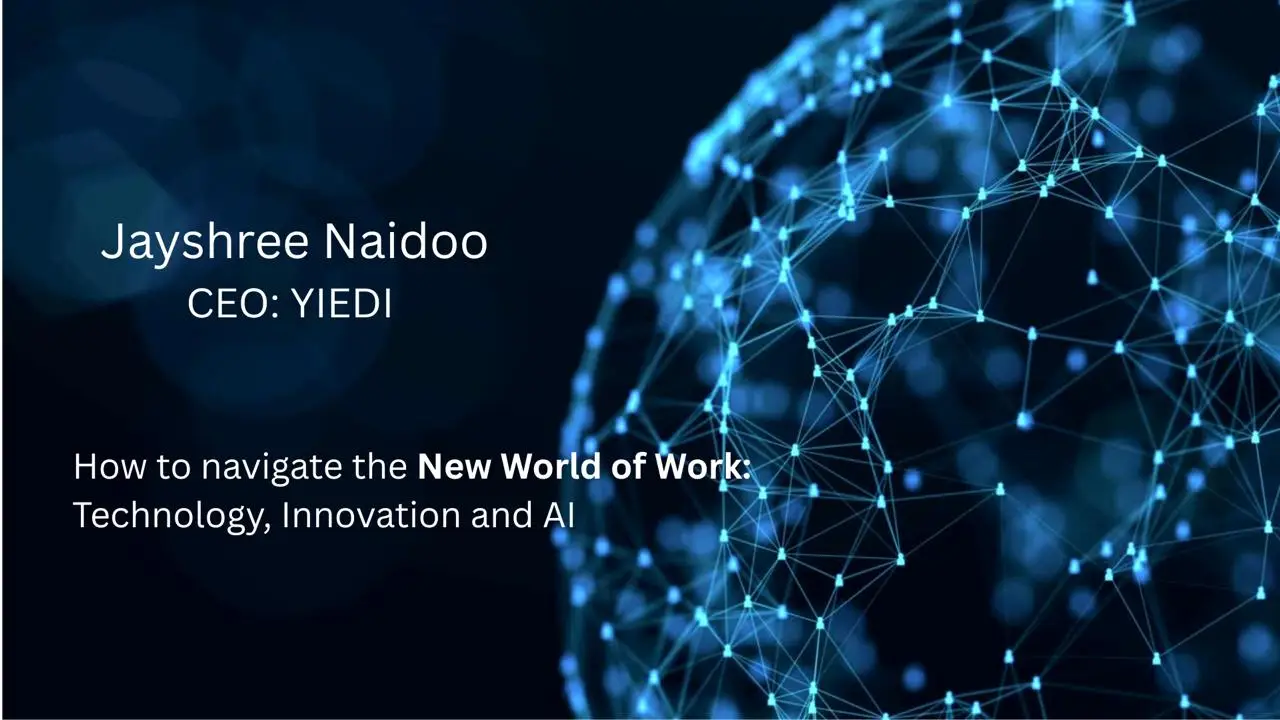
How to Navigate the New World of Work: Technology, Innovation, and AI
When many of us started our careers, we were given a simple formula. Study hard.Get a good job.Work your way up. It was a clear and predictable path. And for a long time, that model worked. But the reality is that the world of work today looks very different. We are living in a time where change is constant. Technology is evolving at a pace we have never seen before. Artificial intelligence is beginning to reshape how work gets done. And the careers that graduates are entering today will not follow the same patterns as those that came before. Some of the jobs that will exist in the next ten years do not exist today. And some of the jobs that existed just a few years ago are already disappearing. So the question is no longer whether work will change. The real question is how we prepare people to navigate a world that is constantly changing. There are three important shifts shaping the future of work. The first is that technology cycles are accelerating. Innovation that once took years is now happening in months. Tools, systems and processes are evolving continuously, and organisations are having to keep up. The second is that skills are expiring faster. What you learn today will need to be updated, adapted or even replaced over time. This means that learning cannot stop at graduation. It must become a lifelong habit. The third is that work is becoming technology enabled across every role. It is no longer only technical teams that engage with digital tools. Whether you are in design, operations, manufacturing or strategy, technology and data are becoming part of how work is done. This brings us to one of the most important developments of our time, the rise of artificial intelligence. AI is often framed as something to fear. There is a perception that it will replace jobs or reduce the need for human contribution. But history tells us something different. Technology does not remove the need for people. It changes the nature of their work. AI is best understood as a tool. It can support research, improve efficiency, analyse data and even assist with decision making. But it still requires human input. It requires context, judgement, creativity and ethical thinking. The real shift is this. AI will not replace professionals. But professionals who know how to use AI will have a significant advantage. At the same time, we are seeing a growing demand for something that is often overlooked in traditional education and corporate environments. Entrepreneurial thinking. This is not only relevant to those who want to start businesses. It is becoming a critical capability within organisations. Entrepreneurial thinking is about how people approach problems, opportunities and uncertainty. It is the ability to see gaps where others see constraints. To move forward without waiting for perfect conditions. To test ideas and learn quickly. To adapt when things do not go as planned. And to focus on solutions rather than obstacles. These are the capabilities that allow individuals and organisations to respond effectively in a changing environment. Through the work we do at YIEDI and WomX, supporting entrepreneurs across South Africa, we see these traits in action every day. Entrepreneurs operate in environments where nothing is guaranteed. They do not have perfect resources or perfect conditions. Yet they continue to build, adapt and grow. What stands out is that the people who succeed are not always the ones with the most resources. They are the ones who are the most resourceful. And this is exactly the mindset that organisations need as industries evolve. As technology becomes more embedded in the way we work, the value of human capability becomes even more important. Skills like : curiosity, adaptability, problem solving and critical thinking Will define the professionals who thrive. Graduates entering the workforce today have access to tools and opportunities that previous generations did not. But with that comes a responsibility to continuously learn and evolve. Your career will not be defined by a single role or a single path. It will be defined by your ability to grow, to adapt and to respond to change. And for industry leaders, there is an equally important responsibility. If we want the next generation to succeed, we must create environments that support learning, encourage innovation and allow people to experiment. We must invest in skills development, mentorship and exposure to new technologies. Because the future of work is not something that will simply happen to us. It is something we will shape through the choices we make today. The technologies we adopt. The people we invest in. And the mindsets we choose to develop. The future will not belong to those who resist change. It will belong to those who are willing to learn, to adapt and to lead in a world that is constantly evolving. Extracts from a talk given by Jayshree Naidoo Institute of Packaging South Africa IPSA Graduation and Board Meeting
